
Sustainable investments as a long-term trend
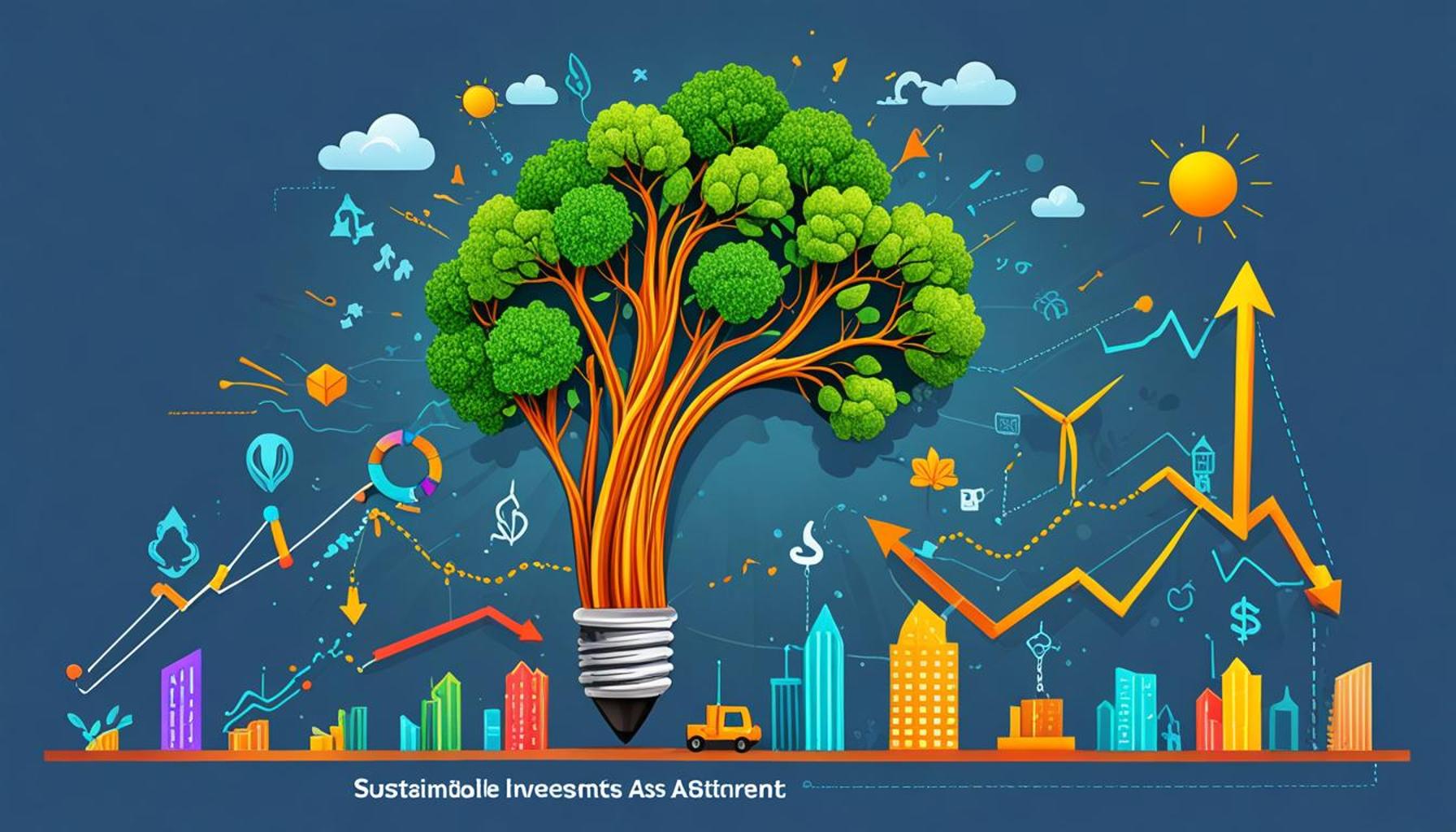
Understanding Sustainable Investments
Sustainable investments are gaining traction as a significant trend in today’s financial landscape. More investors are recognizing the importance of aligning their portfolios with their values to promote a sustainable future. This pivot towards consciousness in investing is not merely a passing trend but rather a reflection of a growing awareness of the potential impact that financial choices can have on the planet and society.
Unlike traditional investments that primarily focus on financial returns, sustainable investments also consider environmental, social, and governance (ESG) factors. This holistic approach involves examining how companies operate, their environmental footprint, how they treat their employees, and their governance practices. By integrating ESG factors, investors can better assess the long-term viability of their investments.
Key Sectors in Sustainable Investments
There are various sectors where sustainable investments are prominently featured:
- Renewable Energy: This includes investments in solar, wind, and hydropower initiatives. For example, companies like NextEra Energy focus on generating clean energy and are at the forefront of the renewable energy revolution, illustrating how sustainable investments can yield financial returns while supporting the planet.
- Green Technology: Innovations in this space, such as electric vehicles developed by Tesla and energy-efficient appliances from companies like GE, help reduce environmental impacts. These technologies not only lessen carbon footprints but also often present lucrative investment opportunities due to increasing consumer demand.
- Socially Responsible Companies: Businesses that emphasize ethical practices, like Patagonia, which prioritizes sustainable manufacturing processes and fair labor practices, attract a dedicated customer base. By investing in such companies, investors can support ethical practices while potentially earning profitable returns.
As awareness of issues such as climate change and social inequality grows, the appetite for sustainable investments continues to expand. Recent studies indicate that over 80% of millennials are willing to invest in socially responsible options. This younger generation is increasingly concerned with not just how much money they can make, but also with the implications of their financial decisions on the world around them.
This shift towards sustainable investments presents a unique opportunity for investors interested in both profitable returns and positive impact. By understanding and embracing sustainable investments, you can position yourself not only for financial success but also for contributing to a more equitable and sustainable world. Thus, integrating sustainable practices into your investment strategy can be an empowering choice that aligns your financial goals with your ethical values.
CHECK OUT: Click here to explore more
The Evolution and Importance of Sustainable Investments
The evolution of sustainable investments is a testament to changing societal values and economic priorities. Historically, investors primarily emphasized financial metrics, often sidelining environmental and social concerns. However, the past decade has witnessed a fundamental shift, with more investors understanding that their financial decisions can have significant consequences beyond mere profit. The implications of climate change, social justice, and ethical governance are becoming critical factors in investment strategies.
One of the driving forces behind this evolution is the realization that businesses with strong ESG practices tend to outperform their peers over the long term. A study conducted by the Harvard Business School highlights that companies committed to sustainability often exhibit higher profitability and lower volatility. This pattern has encouraged investors to view sustainable investments not just as a moral choice, but as a prudent financial strategy.
Benefits of Sustainable Investing
There are various benefits associated with sustainable investing that can appeal to a wide range of investors:
- Reduced Risk: Companies with strong ESG practices are often better equipped to navigate regulatory changes and mitigate risks associated with climate change, making them more resilient in the face of potential downturns.
- Long-term Returns: Economic models suggest that companies prioritizing sustainability may be more sustainable in the long run. For example, firms that invest in clean energy technologies are likely to thrive as global energy policies shift towards sustainability.
- Consumer Preference: Today’s consumers are increasingly choosing brands that align with their ethical values. Companies that prioritize sustainability gain competitive advantages through a loyal customer base. This trend is especially visible among younger consumers who are more aesthetically inclined toward brands that demonstrate social and environmental responsibility.
As we delve deeper into the sustainable investment landscape, it is essential to recognize the various approaches investors can adopt. From negative screening, which excludes companies based on undesirable practices, to active engagement, where investors actively encourage better ESG practices within companies, there are numerous strategies available to those looking to align their portfolios with their values.
The commitment to sustainable investments doesn’t just cater to individual investors. Institutional investors are also making significant strides in this arena. Large pension funds and asset managers are beginning to prioritize ESG factors in their investment decisions, recognizing that aligning with sustainability is advantageous not only for the environment but also for long-term financial performance. This collective movement signals a broader societal shift towards prioritizing responsible investment strategies.
In conclusion, sustainable investments are rapidly emerging as a long-term trend, benefitting both investors and the planet. The recognition that sustainability and profitability can coexist paves the way for a new financial paradigm, prompting both individual and institutional investors to reevaluate their strategies. Embracing sustainable investing is no longer just an option; it has become a vital part of the investment landscape that promises to shape the future of finance.
CHECK OUT: Click here to explore more
Emerging Trends and Innovations in Sustainable Investing
The landscape of sustainable investing is not static; it is continually evolving as new trends and innovations emerge that respond to the pressing needs of society and the environment. As we observe these developments, several key areas stand out as pivotal in shaping the future of sustainable investments.
Green Bonds and Sustainable Finance
One of the most significant innovations in sustainable investing is the rise of green bonds. These financial instruments are specifically issued to fund projects that have positive environmental benefits, such as renewable energy, sustainable water management, and energy-efficient buildings. The market for green bonds has seen exponential growth, with financing exceeding $500 billion in recent years. This growth exemplifies a growing recognition that investment in sustainability can harness capital for projects that not only generate returns but also contribute to global efforts against climate change.
Moreover, sustainable finance is gaining traction at an unprecedented pace. Financial institutions are increasingly integrating ESG criteria into their lending and investment processes, creating a network of financing that promotes sustainability. Banks and investment firms are developing sustainable finance frameworks that aim to create a measurable impact. For instance, the issuing of sustainability bonds is becoming common, enabling investors to directly support projects that align with their values while expecting reasonable returns.
Technological Advances and Data-Driven Solutions
Technology is also playing a vital role in the evolution of sustainable investing. With advancements in data analytics and artificial intelligence, investors can now analyze vast amounts of ESG data more effectively. Platforms that provide detailed assessments of corporate sustainability standings, such as sustainability ratings or impact measurement tools, have emerged, allowing investors to make more informed decisions. For example, tools that assess a company’s carbon footprint or social impact help investors understand the real implications of their investments, leading to more transparency and accountability.
Impact Investing: A Shift Towards Measurable Outcomes
Another exciting development is the concept of impact investing, which focuses on generating measurable social and environmental impact alongside financial returns. This approach encourages investors to allocate capital to enterprises and initiatives explicitly designed to address societal challenges, such as affordable housing or access to clean water. With impact investing, individuals and institutions can participate in solutions to pressing issues while also receiving a return on their investments.
This shift towards measurable outcomes is also influencing philanthropic practices. Increasingly, foundations and nonprofits are partnering with private equity firms to drive sustainable economic growth through impact investing strategies. Such collaborations signify a broader acceptance that societal good can align harmoniously with financial returns, encouraging more capital to flow toward sustainable initiatives.
Regulatory Ripple Effects
Furthermore, regulatory frameworks are increasingly mandating transparency regarding ESG factors. Recent initiatives, such as the European Union’s Sustainable Finance Disclosure Regulation (SFDR), are setting benchmarks for reporting on sustainability impacts. In the United States, the Securities and Exchange Commission (SEC) is advocating for greater disclosure of ESG information, which will likely propel more investors and companies towards adopting sustainable practices. These regulatory changes not only serve to enhance transparency but also reinforce the notion that sustainable investments are a critical component of a well-rounded portfolio.
Overall, the trajectory of sustainable investments reflects a broader understanding of the interconnectedness of profits, principles, and long-term viability. By integrating innovative financial products, leveraging technology, embracing measurable impact, and responding to evolving regulatory frameworks, sustainable investing is positioned as a forward-thinking approach that benefits both investors and society at large. This shift underscores the reality that sustainability isn’t just a passing trend; it is becoming integral to the very fabric of modern finance.
SEE ALSO: Click here to read another article
Conclusion
As we navigate through the complexities of the modern financial landscape, it becomes increasingly clear that sustainable investments are not merely a passing trend, but rather a vital and permanent fixture in shaping the future of finance. In recent years, we have witnessed profound shifts in how investors prioritize their impact on the environment and society, leading to the rise of diverse investment instruments like green bonds and the embracement of impact investing. These developments underscore a growing understanding that financial returns can coexist harmoniously with ethical considerations.
The advancement of technology has empowered investors with unprecedented data-driven tools that inform their decisions, allowing for greater transparency regarding a company’s sustainability practices. Additionally, the evolving regulatory landscape emphasizes the importance of integrating ESG criteria into financial assessments, guiding both businesses and investors towards responsible choices.
Ultimately, the narrative of sustainable investing encapsulates a profound shift in societal values. It reflects a recognition that the health of our planet and communities is inextricably linked to long-term financial success. For investors, embracing sustainability not only offers the potential for meaningful returns but also fosters a better world for future generations. As we look ahead, the imperative for sustainable investments becomes increasingly essential, encouraging all stakeholders to participate in this transformative journey towards a resilient and equitable global economy.