How to Use Spreadsheets to Organize the Monthly Budget
Understanding the Power of Spreadsheets
The journey toward financial stability can seem daunting, but it is essential for achieving personal security and fostering future growth. Among the many tools available, spreadsheets stand out as a particularly effective way to manage your finances. By harnessing this technology, you can transform raw data into meaningful insights that guide your financial behavior.
One of the greatest advantages of spreadsheets is their versatility. You can customize them to meet your specific financial needs. For instance, consider tracking expenses. A well-crafted spreadsheet allows you to categorize spending into various areas, such as housing costs, food expenses, transportation, and entertainment. This level of organization not only reveals where your money is being spent, but also highlights potential areas for savings. Imagine reviewing your monthly expenditures and realizing that cutting down on dining out could free up additional funds for your savings account or for a planned family vacation.
Planning Your Income
In addition to tracking expenses, spreadsheets empower you to plan your income. By establishing a monthly income forecast, you can anticipate cash flow and prepare for fluctuations—such as those that might occur due to seasonal employment or bonus periods. For example, if you know you typically receive a year-end bonus, you can allocate a portion toward savings or debt repayment rather than indulging in impulsive purchases. This foresight ensures that you maximize every dollar you earn, laying a solid foundation for financial independence.
Setting Budgets with Confidence
Equally important is the ability to set budgets. By defining spending limits across different categories, you ensure that your financial goals remain within reach. Create a budget that allocates funds for essential expenses, savings, and discretionary spending. Remember to reassess this budget regularly to align with changes in your life circumstances, such as a promotion or a significant expense arising from car repairs. Not only does this practice foster discipline, but it also instills a sense of control over your financial journey.
As you embrace the use of spreadsheets, remember that the goal extends beyond mere number crunching. It’s about building a secure future that allows you to live comfortably today while planning for tomorrow. By organizing your finances with data-driven insights, you empower yourself to navigate life’s challenges with confidence and purpose. Each thoughtful financial decision helps pave the way toward a stable and fulfilling future. So, take charge of your finances today and let your spreadsheets be the roadmap to your journey of financial freedom!
CHECK OUT: Click here to explore more
Creating a Structured Approach to Your Finances
When it comes to organizing your monthly budget, spreadsheets offer an effective framework that empowers you to take control of your financial landscape. The simplicity of entering data and the strength of visual representation can be game-changers in achieving your financial goals. To maximize the effectiveness of your spreadsheet, start by developing a clear structure that you can consistently follow. This structured approach allows you to maintain focus and clarity over your financial activities.
Designing Your Spreadsheet
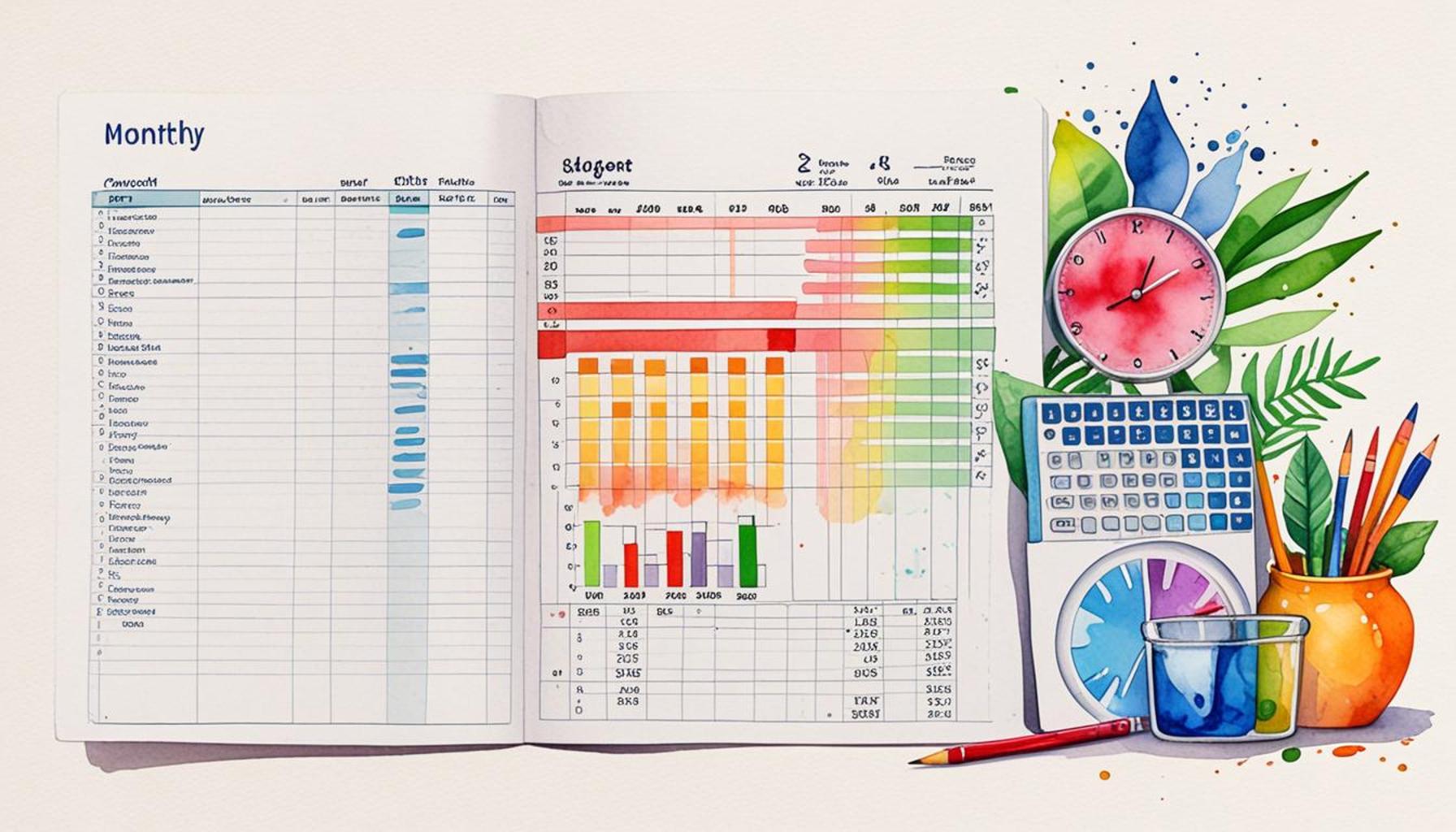
Before diving into the details of your budget, consider how to best design your spreadsheet to suit your lifestyle. Begin by outlining essential categories that you want to include. A typical personal budget spreadsheet might feature the following columns:
- Date: The date for each expense or transaction.
- Description: A brief note about the expenditure or income.
- Category: The area of spending, such as groceries, utilities, or entertainment.
- Amount: The dollar value of each expense or income entry.
- Notes: Any other information relevant to that transaction.
By structuring your spreadsheet this way, you create a comprehensive view of your income and expenses, making tracking more intuitive. Having this information readily visible invites you to engage with your finances more actively, which is a crucial step toward financial empowerment.
Entering Your Income and Expenses
Once your spreadsheet is laid out, the next step is to enter your income and expenses accurately. Begin by documenting all sources of monthly income. This may include your salary, side gigs, or any other source of revenue. Follow up with a thorough entry of your monthly expenditures. Don’t overlook small purchases; they add up quickly and can significantly impact your budget.
It’s vital to review your bank statements and keep receipts as a reference while entering this data. This practice not only enhances your awareness of spending habits but also reveals patterns that can aid in budget adjustments. If you notice that certain categories consistently exceed their assigned budgets, it might be time to reflect on those habits and identify areas for potential changes.
Analyzing Your Spending Habits
Once you have populated your spreadsheet with your financial data, analyzing your spending habits becomes the next step. This analysis is instrumental in understanding where your money is going and how to modify your behavior for better financial outcomes. Look for trends that may be hindering your financial health, such as recurrent overspending in specific categories.
By using tools available in your spreadsheet software—such as graphs and charts—you can visually depict your spending over time. Visual aids often highlight information more powerfully than numbers alone, reinforcing your understanding of your financial situation. This newfound clarity can motivate you to make conscious choices moving forward, ultimately leading towards your financial goals.
With a structured approach to your spreadsheet, you’re not just organizing numbers; you’re creating a path to a brighter financial future. Every step you take in analyzing and adjusting your spending sets the stage for achieving your financial dreams, encouraging you to make informed decisions with conviction.
CHECK OUT: Click here to explore more
Implementing Budgeting Techniques in Your Spreadsheet
After you have organized your income and expenses, the next step is to implement effective budgeting techniques within your spreadsheet. This not only helps in maintaining financial order, but also encourages you to make mindful financial choices each month. Utilizing different budgeting methods allows you to tailor your approach to fit your unique circumstances and goals.
The Zero-Based Budgeting Method
One of the most popular techniques is the zero-based budgeting method. This approach dictates that every dollar you earn is allocated towards either savings or expenses, with the ultimate goal of reaching zero balance at the end of the month. To implement this in your spreadsheet, create a section at the bottom that outlines your total income and establishes that outgoing expenses plus savings equal this total.
For instance, if your income is $3,000, meticulously assign portions to categories like housing, transportation, savings, and entertainment. If your expenses total $2,800, the remaining $200 should be directed towards savings or debt repayment. This method not only fosters accountability but also instills a sense of ownership over your finances.
The 50/30/20 Rule
Another effective technique is the 50/30/20 rule. This straightforward formula allocates 50% of your income to needs, 30% to wants, and 20% to savings and debt repayment. To visualize this in your spreadsheet, use color coding for each category; for example, green for needs, blue for wants, and orange for savings. This simple differentiation helps in providing instant clarity on your financial landscape.
With this guideline, if your monthly income is $3,000, you would ideally set aside $1,500 for necessities (like rent and utilities), $900 for discretionary spending (like dining out or hobbies), and $600 for savings or debt repayment. As your financial situation evolves, this rule can easily be adjusted to fit new priorities, especially during life-changing events like a new job or moving homes.
Setting Up Conditional Formatting
An innovative way to enhance your spreadsheet is by using conditional formatting. This feature allows you to automatically highlight entries in your spreadsheet that exceed budget limits or require attention. For instance, if your grocery budget is $400 and you enter an expense of $450, you can set the spreadsheet to automatically highlight that entry in red. This real-time visual cue prompts immediate adjustments and promotes proactive financial management.
This technique helps create a sense of urgency and awareness about spending behaviors. Maintaining vigilance over your finances through these visual markers ensures you remain in tune with your budget, ultimately leading to healthier spending habits.
Review and Adjust Regularly
No budgeting strategy is a one-size-fits-all solution. As circumstances change, so too should your budget. It’s essential to review your spreadsheet regularly—ideally monthly—to assess what worked, what didn’t, and where improvements can be made. By routinely analyzing your financial data, you build a deeper understanding of your spending habits and can make informed decisions about necessary adjustments.
As you engage with your spreadsheet in this dynamic way, you empower yourself to adapt your financial plan. Whether it’s adjusting for an increase in income, accommodating for unexpected expenses, or ramping up savings for an upcoming goal, being proactive ensures that your budget evolves as you do.
Utilizing a structured spreadsheet not only aids in organizing your finances, but when paired with effective budgeting techniques, it transforms your approach to financial management into a powerful tool for success. This conscious engagement with your money sets you on a course towards financial wellness, where abundance replaces anxiety.
CHECK OUT: Click here to explore more
Conclusion
In today’s fast-paced world, taking control of your finances is more crucial than ever, and using spreadsheets offers a practical and effective way to do just that. By implementing structured budgeting techniques like the zero-based budgeting method or the 50/30/20 rule, you can gain a clear understanding of your financial inflow and outflow, while also aligning your spending with your priorities.
Moreover, utilizing features like conditional formatting transforms your spreadsheet into a dynamic tool that not only assists you in tracking your expenses but also alerts you when adjustments are needed. This proactive approach fosters a healthier relationship with your money and encourages responsible spending habits. Regularly reviewing and adjusting your budget ensures that it remains relevant and effective in achieving your financial goals.
The path to financial wellness is paved with intention and awareness; as you engage with your budget each month, you empower yourself to make informed decisions that reflect your values and aspirations. By thoughtfully organizing your finances through spreadsheets, you are not just managing your money—you are investing in your future.
Remember, every small step you take today builds towards greater financial freedom tomorrow. Seize the opportunity to embrace budgeting not as a constraint, but as a powerful tool for manifesting your financial dreams and aspirations with clarity and confidence.